 EN
Home Skincare
Ideal for daily facial care routines, providing easy-to-use beauty solutions at home.

2026/09/26
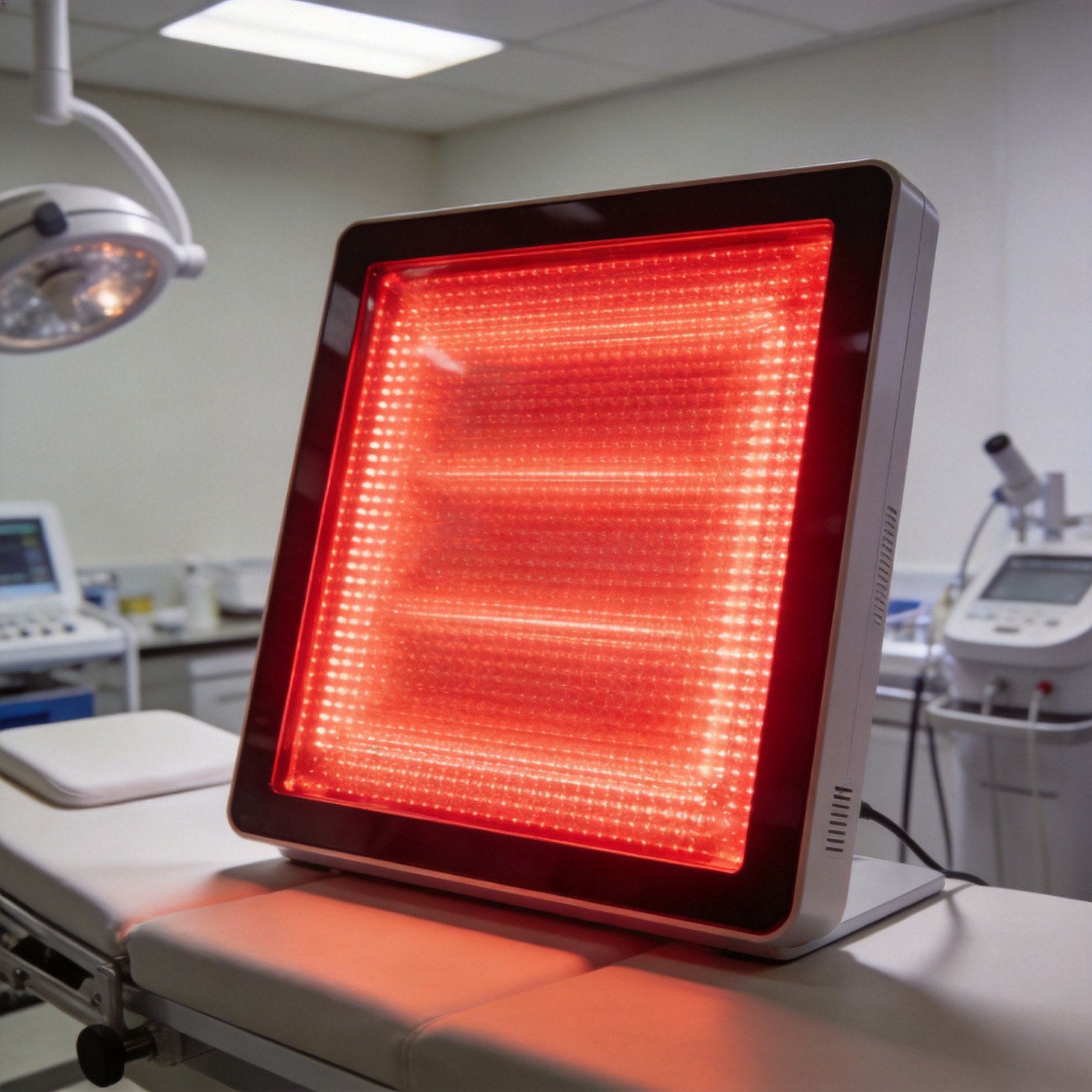
Buying a red light therapy panel for a clinic is not the same as selecting a wellness device for a home user. The purchase has to work in a real appointment schedule, withstand repeated use, fit your treatment protocol, and arrive with documentation your team can review. From an OEM/ODM brand-development perspective, the most reliable decision is rarely the panel with the longest feature list. It is the unit whose intended use, light-output data, controls, service plan, and delivery process can be verified before a larger order.
This guide turns that principle into a practical procurement process. It is designed for clinic owners, purchasing teams, and distributors who need to compare a red light therapy panel without turning marketing language into an operating assumption.
Write a one-page use case before you request quotations. State which service room will use the panel, whether it supports facial, localized, or larger-area sessions, how many appointments are expected per day, who will operate it, and how cleaning, storage, and client records will be handled. This brief changes the questions you ask. A compact red light therapy panel may be appropriate for a focused protocol, while a larger panel can create bottlenecks if the stand, clearance, ventilation, or room turnover has not been planned.
Also separate a wellness-oriented offering from a medical claim. In the United States, photobiomodulation devices may require premarket evidence and labeling appropriate to their intended use. That does not mean every red light therapy panel follows the same pathway; it means the supplier’s documents and your marketing language should be reviewed against the product’s actual intended market and claim set. Ask a qualified regulatory adviser to confirm the route that applies to your program.
Procurement teams often receive a wavelength list, a large irradiance number, and a promise of broad treatment coverage. Those details can be useful, but only when the measurement conditions are clear. For every red light therapy panel under review, ask the supplier to identify the measurement distance, measurement method, operating mode, beam area, and whether the figure is a peak, average, or nominal value. If two quotations use different distances or methods, their headline numbers are not directly comparable.
| Review area | What to request | Why it matters in a clinic |
|---|---|---|
| Optical output | Wavelength configuration, measurement distance, method, and uniformity information | Helps the team design consistent positioning and session instructions. |
| Controls | Timer range, intensity settings, treatment modes, and control lock behavior | Reduces operator variation between appointments. |
| Mechanical setup | Dimensions, mounting or stand drawings, cable routing, and cleaning guidance | Prevents installation surprises and supports safe room turnover. |
| Electrical documentation | Market-specific safety and EMC reports where relevant, plus labeling samples | Supports compliance review and distributor due diligence. |
| Lifecycle support | Warranty terms, spare-part policy, repair escalation route, and response time | Protects appointment capacity when a unit needs service. |
For a red light therapy panel positioned as medical electrical equipment, standards such as IEC 60601-1 may be relevant, but applicability depends on intended use, classification, and target market. Treat a certificate name as the start of verification, not the end of it. Request the report holder, model coverage, issue date, and a clear mapping from the quoted configuration to the submitted configuration.
A capable red light therapy panel supplier should be able to explain how a sample becomes a repeatable production order. Ask for a controlled document package: product specification, user instructions, labeling artwork, electrical information, packaging specification, inspection points, and change-control process. For branded programs, clarify which features, artwork, accessories, manuals, and cartons are frozen before mass production.
Batch consistency deserves direct attention. A clinic does not benefit from an excellent sample if later units differ in controls, output behavior, finish, or supplied accessories. Include incoming inspection criteria in the purchase agreement, define the acceptable sample, and agree how deviations will be reported and resolved. This is particularly important when a panel is sourced through an OEM/ODM program, where cosmetic customization and packaging changes can affect the final configuration.
Do not evaluate a red light therapy panel only on an unboxing table. Run a short red light therapy panel pilot in the intended room with the people who will use it. Check assembly time, stand stability, cable placement, control readability, timer workflow, client positioning, cleaning steps, noise, heat perception, and the space required for staff movement. Record questions that arise during setup; they often reveal the training or instruction details that need revision before rollout.
Give the pilot a pass/fail checklist instead of an informal impression score. Typical gates include complete documents, consistent controls, practical session timing, acceptable room fit, clear operator instructions, and a workable service-contact route. If a point is unresolved, label it as an open item with an owner and a due date. That discipline makes quotation comparisons more meaningful than a simple unit-price ranking.
The lowest red light therapy panel quoted price may not be the lowest operating cost. Build the comparison around landed cost, installation needs, expected utilization, training time, replacement lead time, warranty exclusions, and the effect of downtime on booked appointments. Ask whether spare parts, replacement power supplies, stands, or remote troubleshooting are available for your market. These details are less exciting than light modes, but they often determine whether the clinic can keep a protocol on schedule.
For multi-site buyers, ask how the supplier handles serial tracking, production records, inspection reporting, and post-sale escalation. A factory with standardized incoming, in-process, and finished-product quality checkpoints can make it easier to align expectations, but the buyer should still verify the process for the exact model and order configuration.
Before issuing a purchase order, summarize the agreed configuration in a final approval sheet: model, accessories, controls, documentation version, packaging, market labeling, warranty, inspection criteria, and delivery milestones. Arrange staff training around the approved instructions, not around unverified clinical promises. Keep red light therapy panel marketing claims separate from what the device documentation supports, and update materials only after the appropriate review.
A professional red light therapy panel procurement decision is therefore a chain of evidence: a defined clinic use case, comparable technical data, relevant documentation, a realistic pilot, and a service plan. When those pieces agree, clinics can choose a panel with more confidence and create a smoother path from sample approval to daily use.

2026/10/30
Discover why in-house mold development helps an RF beauty device manufacturer improve product consistency, iteration speed, tooling control, and production readiness.

2026/10/30
Learn how to verify an RF beauty device manufacturer's R&D and prototyping capabilities using practical engineering workflows and audit checklists.

2026/10/30
Learn what shapes MOQ when choosing an RF beauty device manufacturer and how to plan a lower-risk first order with balanced platform and customization.

2026/10/30
Use this RF beauty device manufacturer evaluation checklist to compare safety evidence, OEM and ODM capability, quality control, and launch readiness.

2026/10/30
See how technology makes beauty at home more guided, consistent, and informed—plus a practical checklist for choosing devices wisely.

2026/10/30
Explore how AI and smart devices shape the future of beauty with responsive routines, clear guidance, trustworthy design, and user-controlled care.

Ideal for daily facial care routines, providing easy-to-use beauty solutions at home.

Perfect for spas and salons’ frequent treatments, enhancing client experiences and results.

Supports dermatologists with advanced devices for professional skin therapy sessions.

Delivers innovative solutions for full-body massage and relaxation with home devices.

Features anti-aging technologies to help reduce wrinkles and stimulate skin vitality.

Specialized devices for safe and effective hair removal suitable for home or clinic use.

Our customers love the Perfect Idea beauty devices. Quality, packaging, and results are all outstanding. We saw increased repeat sales after adding their facial cleansers to our lineup. Their support team is responsive and reliable.

Perfect Idea brings innovation and reliability to home beauty appliances. Our collaboration introduced their massage tools to Japanese women, boosting customer satisfaction and growing our brand trust across the region.

We partnered with Shenzhen Perfect Idea Tech for their beauty equipment. The shipping was fast and every product matched our expectations. Their home-use massagers are especially popular with local salons and home users.

The stylish packaging and attractive design make Perfect Idea stand out. French consumers appreciate the easy instructions and visible results. Communication was efficient and orders always arrived on time.

Perfect Idea home use personal care devices have become a favorite with our clients. The beauty device line offers quality at a reasonable price, and technical training for our staff made onboarding easy.

We selected Perfect Idea for our beauty product portfolio and have seen very positive feedback from our customers. Products are easy to market online and the customer support is reliable and helpful.
