 EN
Home Skincare
Ideal for daily facial care routines, providing easy-to-use beauty solutions at home.

2026/09/26
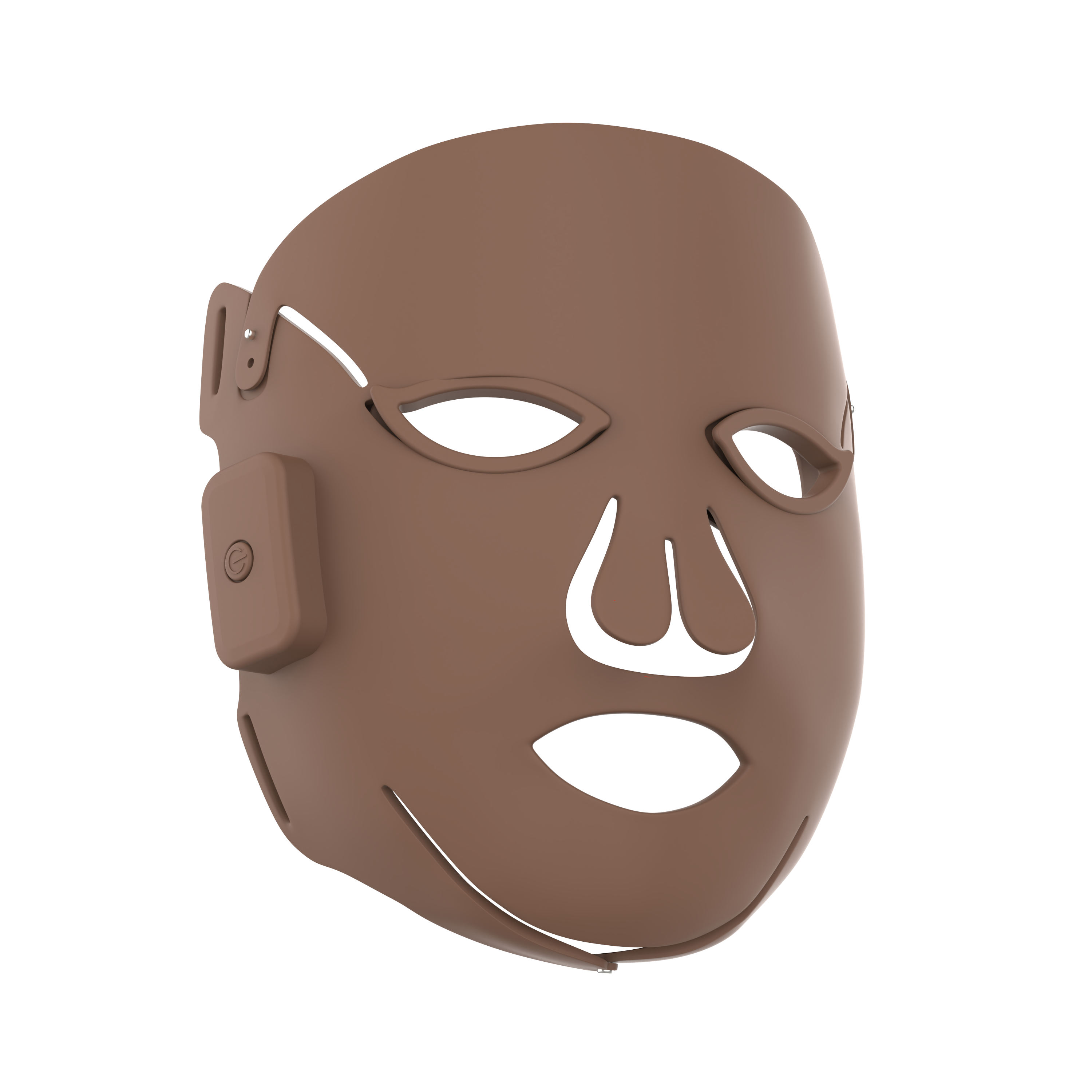
For a distributor, sourcing led light therapy products is not simply a matter of comparing mask shapes or asking for a price list. The unit that looks attractive in a sample box must also survive a real channel launch: its labeling needs to match the intended market, its documents need to be traceable, and later production runs need to resemble the approved sample. That is why a disciplined led light therapy sourcing process starts with commercial and quality questions together.
This guide is written for distributors building an assortment for home beauty channels. It treats led light therapy equipment as a product category with consumer-facing expectations and B2B controls. The goal is not to promise a treatment result; it is to help you create a defensible supplier decision and a smoother handoff to your retailers or brand customers.
Before requesting quotations, define where the product will be sold, who will use it, and what the product page may say. A marketplace listing, a salon distributor catalog, and a private-label beauty launch can require very different packaging, instructions, language versions, and claims review. Write a one-page brief that separates cosmetic positioning from any medical or therapeutic language. Ask your compliance adviser to review the final claims for each target market.
At this stage, decide whether you are sourcing a mask, panel, handheld format, or another form factor. Do not treat every led light therapy device as interchangeable. Wearability, eye protection, controls, charging method, cleaning instructions, and storage needs affect returns and customer support as much as the headline feature list.
A low unit price can hide costly gaps. Score suppliers against the same criteria so the evaluation stays comparable. Include commercial, engineering, quality, and service owners in the review rather than leaving the decision to procurement alone.
| Area | What to ask | Evidence to request |
|---|---|---|
| Product definition | What exactly is included in the approved configuration? | Controlled specification, bill of materials summary, packaging list |
| Quality controls | How is the approved sample linked to mass production? | Inspection plan, acceptance criteria, batch traceability process |
| Customization | Which logo, color, manual, and packaging changes are feasible? | Artwork workflow, sample approval milestones, MOQ impact |
| Documentation | Which documents can be supplied for the intended market? | Document index, test-report identifiers, labeling review process |
| After-sales | How are defects, spare parts, and feedback handled? | Warranty terms, response process, corrective-action template |
For led light therapy equipment, make the scorecard a gate, not a presentation. A supplier should be able to explain how a design change is recorded, who approves it, and how a subsequent batch is checked against the approved version. If answers rely only on informal chat messages, the distributor is carrying unnecessary risk.
Samples are useful, but they are not proof of repeatability. During sample evaluation, document the exact model, accessories, power adapter, software or controller revision where relevant, packaging, labeling, and instruction version. Photograph the accepted configuration and attach the record to the purchase specification.
Many buyers initially focus on a long list of modes. In practice, a distributor benefits more from a clear, stable configuration that customers can understand and support. Ask how the supplier controls changes to LEDs, drivers, plastics, straps, batteries, and packaging components. A substitute part may alter fit, reliability, or the information your team uses in marketing.
Define pre-production, in-process, and pre-shipment checks before the first order. Your plan can cover appearance, assembly, charging and basic functional checks, labeling, accessories, carton markings, and the documents shipped with each batch. Set the sampling approach, defect classifications, photo requirements, and escalation path in writing. An independent inspection partner may be appropriate when the order size or channel exposure justifies it.
Documentation should not arrive after goods are ready to ship. Share the product brief and target markets early, then ask the supplier to map available documents to the specific configuration you intend to buy. Certificates, test reports, declarations, and labels are not interchangeable, and their relevance can change when the model, power supply, packaging, or claims change.
A Shenzhen-based home beauty device OEM/ODM factory in the approved merchant profile describes support across categories such as CE, FCC, RoHS, and PSE. For any supplier, request configuration-specific documentation and have the importer or local compliance professional confirm what applies to your market. Do not convert a supplier capability statement into a product claim without verification.
Private-label sourcing can include a logo, colorway, packaging, manual localization, or a more substantial design change. Put each requested change into a change-control list with an owner, cost, lead-time effect, new sample requirement, artwork approval, and document impact. This protects the distributor from assuming that a visual change is commercially minor when it actually affects tooling, MOQ, or compliance review.
For a new led light therapy line, run a small pilot or first-order validation before committing to an expanded assortment. Collect retailer questions, customer-service themes, damage reports, and return reasons. Feed that information back into the next purchase specification instead of letting it live only in inboxes. This is often where a reliable distributor program becomes more valuable than a one-off import.
Compare quotations using the same incoterm and configuration. Add sampling, tooling, artwork, inspection, freight, duties, local warehousing, documentation review, service parts, and expected warranty handling. A product with a slightly higher factory price may be easier to support if the supplier provides consistent instructions, packaging discipline, and a clear corrective-action process.
Ask for a realistic production timeline that includes sample approval, artwork sign-off, component purchasing, production, inspection, and shipment. Avoid presenting a target launch date to customers until the critical approvals have owners and dates. That restraint makes led light therapy sourcing more predictable for every party in the channel.
The sound sourcing decision is not necessarily the supplier with the longest feature list. It is the partner whose configuration, records, quality process, and communication can be repeated as your distribution business grows. Use this checklist to turn led light therapy from a promising category into a controlled, supportable program.

2026/10/30
Discover why in-house mold development helps an RF beauty device manufacturer improve product consistency, iteration speed, tooling control, and production readiness.

2026/10/30
Learn how to verify an RF beauty device manufacturer's R&D and prototyping capabilities using practical engineering workflows and audit checklists.

2026/10/30
Learn what shapes MOQ when choosing an RF beauty device manufacturer and how to plan a lower-risk first order with balanced platform and customization.

2026/10/30
Use this RF beauty device manufacturer evaluation checklist to compare safety evidence, OEM and ODM capability, quality control, and launch readiness.

2026/10/30
See how technology makes beauty at home more guided, consistent, and informed—plus a practical checklist for choosing devices wisely.

2026/10/30
Explore how AI and smart devices shape the future of beauty with responsive routines, clear guidance, trustworthy design, and user-controlled care.

Ideal for daily facial care routines, providing easy-to-use beauty solutions at home.

Perfect for spas and salons’ frequent treatments, enhancing client experiences and results.

Supports dermatologists with advanced devices for professional skin therapy sessions.

Delivers innovative solutions for full-body massage and relaxation with home devices.

Features anti-aging technologies to help reduce wrinkles and stimulate skin vitality.

Specialized devices for safe and effective hair removal suitable for home or clinic use.

Our customers love the Perfect Idea beauty devices. Quality, packaging, and results are all outstanding. We saw increased repeat sales after adding their facial cleansers to our lineup. Their support team is responsive and reliable.

Perfect Idea brings innovation and reliability to home beauty appliances. Our collaboration introduced their massage tools to Japanese women, boosting customer satisfaction and growing our brand trust across the region.

We partnered with Shenzhen Perfect Idea Tech for their beauty equipment. The shipping was fast and every product matched our expectations. Their home-use massagers are especially popular with local salons and home users.

The stylish packaging and attractive design make Perfect Idea stand out. French consumers appreciate the easy instructions and visible results. Communication was efficient and orders always arrived on time.

Perfect Idea home use personal care devices have become a favorite with our clients. The beauty device line offers quality at a reasonable price, and technical training for our staff made onboarding easy.

We selected Perfect Idea for our beauty product portfolio and have seen very positive feedback from our customers. Products are easy to market online and the customer support is reliable and helpful.
