 EN
Home Skincare
Ideal for daily facial care routines, providing easy-to-use beauty solutions at home.

2026/10/19
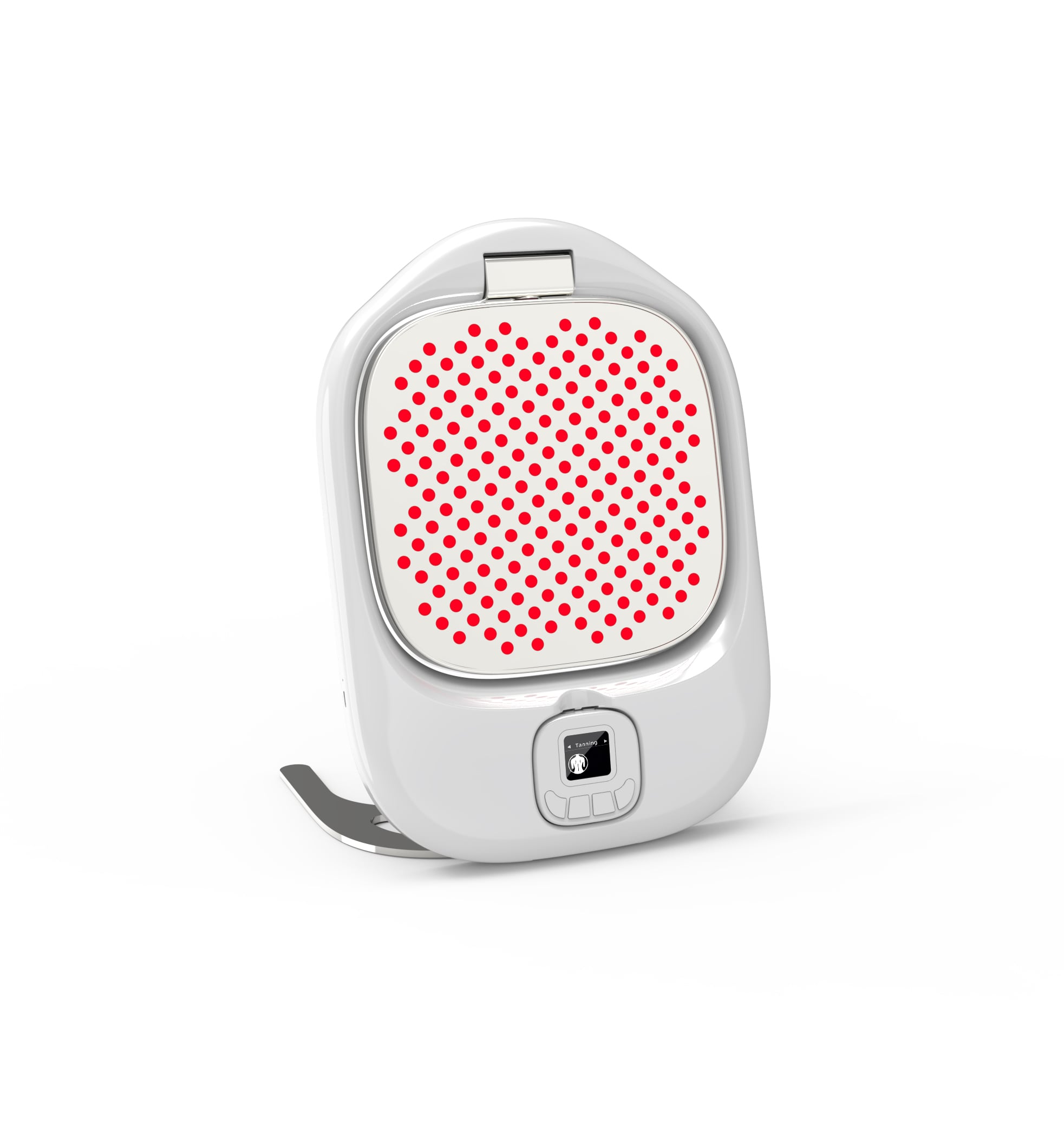
A clinic should choose a red light therapy device as a service-system decision, not a catalogue comparison. The right red light therapy setup supports a defined patient pathway, repeatable positioning, documented settings, safe operation, and reliable supplier support. It does not promise outcomes that its intended use or evidence cannot support.
This red light therapy guide is a procurement framework, not a treatment protocol. Local rules, the device label, and qualified clinical judgment determine whether and how a clinic introduces red light therapy.
Write a one-page brief before seeking quotations. Define the concern or indication within your permitted scope, the target area, the patient journey, and whether red light therapy is standalone or complements another service. A facial workflow, a scalp workflow, and a large-area workflow make different demands on coverage, positioning, sanitation, and room turnover.
Ask: Which red light therapy uses are in our scope? How many appointments can the room support? Will patients sit, recline, or stand? Can staff reproduce the same distance and position? What screening, eye-safety, cleaning, and documentation policies apply? These questions reveal whether a mask, a panel, or a targeted unit fits your clinic.
A compact facial system can be practical for a tightly defined red light therapy service. A larger panel may offer broader coverage, but it adds questions about clearance, distance control, heat, and setup. Do not compare formats in the abstract; compare the actual workflow your team must deliver.
For red light therapy, a specification has value only when its terms connect. Published photobiomodulation discussions commonly distinguish visible red wavelengths around 630–660 nm from near-infrared ranges around 830–850 nm. Those ranges are not a universal prescription. The procurement question is whether a manufacturer clearly states wavelengths, measurement method, operating distance, session assumptions, and the intended use behind its red light therapy claims.
Irradiance is power density at a stated distance, usually mW/cm². Fluence is energy delivered over time, usually J/cm². For a red light therapy clinic setup, distance, exposure time, beam pattern, and treatment-area coverage all affect what reaches the target. A large power number alone is not a comparison.
Ask how output was tested and obtain the method in writing. PBM literature describes dose-response behavior and varied study protocols, so clinics should use application-specific red light therapy documentation rather than borrow a generic session time. If output cannot be tied to distance and protocol assumptions, staff cannot train around it reliably.
A device that looks impressive in a demonstration can create friction in a clinic. Map intake, positioning, skin preparation where appropriate, red light therapy setup, monitoring, cleaning, documentation, and reset. The equipment should reduce variables rather than add them.
During a trial, test adjustability, patient access, cable management, noise, cooling, cleaning instructions, and operation for different body sizes or mobility needs. For facial red light therapy, coverage geometry and consistent positioning may matter as much as LED count. For large areas, clearance and distance markers often matter more.
Let operators set up the red light therapy device themselves. Can they position a patient consistently, find the correct preset, clean the contact surfaces, and record what happened without improvisation? If not, the device may be technically capable but operationally weak.
Compliance is market-specific. A red light therapy logo, registration claim, or sales statement is not enough. Verify the model, intended use, labeling, and regulatory status through the records appropriate to the market where the clinic will operate. In the United States, FDA guidance addresses evidence and labeling expectations for certain PBM device submissions; it does not make every light device suitable for every claim.
Request a documentation pack for each red light therapy model: product identity, intended use, instructions, contraindications, warnings, electrical-safety information, cleaning and maintenance requirements, warranty terms, and service contacts. If a supplier cites CE, FCC, RoHS, FDA clearance, or another credential, verify that its model and claimed purpose match. A document for another configuration does not answer the clinic’s question.
Also review eye-safety guidance, signage, staff training, screening, incident escalation, and the limits of marketing claims. Do not turn a red light therapy wellness or aesthetic device into a claim to diagnose, treat, cure, or prevent disease unless authorization and clinical governance clearly support it.
Broad red light therapy claims do not validate a particular device or clinic protocol. Review evidence by model, wavelength configuration, treatment geometry, dose assumptions, population, and outcome. Research on one LED configuration cannot automatically transfer to another.
Prioritize transparent red light therapy evidence: clearly described protocols, disclosed limitations, and alignment between the study setup and the service planned. A credible supplier can explain both what its evidence supports and what it does not. That is more useful than before-and-after material without protocol context.
For private-label or OEM/ODM red light therapy purchasing, the product is only one risk area. Review incoming inspection, functional testing, final inspection, batch traceability, production change control, and nonconformance handling. A sample is useful, but it does not prove that later red light therapy units will match its output or documentation.
Ask how firmware, LED-bin, power-supply, or enclosure changes are communicated. Confirm spare parts, repair turnaround, remote troubleshooting, operator training, and escalation contacts. A clinic needs a red light therapy supplier that can keep the system in service after delivery.
Use a written sample acceptance plan. Inspect the unit, labels, documentation, setup time, cleaning feasibility, noise, heat, and staff usability. If output verification matters, define the instrument, distance, tolerance, and response to a mismatch before the sample is evaluated. Run any internal red light therapy pilot only under the clinic’s governance; validate workflow and training readiness rather than create unsupported claims.
| Area | Verify | Decision value |
|---|---|---|
| Clinical fit | Intended use, areas, patient pathway | Confirms the red light therapy format fits the service. |
| Technical transparency | Wavelengths, output, distance, coverage, test method | Supports repeatable red light therapy setup. |
| Safety and compliance | Market records, labeling, warnings, eye guidance | Controls deployment and claims. |
| Workflow | Positioning, sanitation, reset time, footprint | Tests appointment practicality. |
| Evidence and supplier control | Model-relevant research, traceability, service | Reduces red light therapy risk and downtime. |
The appropriate red light therapy device is not necessarily the one with the largest brochure number. It is the system whose intended use, measurable operating conditions, safety records, room workflow, and supplier support the clinic can explain and reproduce. Compare finalists with clinical leadership, operations, procurement, and compliance.
Choose the red light therapy configuration your team can deliver consistently. Require evidence rather than promises, test the live workflow rather than the showroom experience, and record the basis for the decision. That gives the clinic clearer boundaries and stronger operational control from day one.

2026/10/30
Discover why in-house mold development helps an RF beauty device manufacturer improve product consistency, iteration speed, tooling control, and production readiness.

2026/10/30
Learn how to verify an RF beauty device manufacturer's R&D and prototyping capabilities using practical engineering workflows and audit checklists.

2026/10/30
Learn what shapes MOQ when choosing an RF beauty device manufacturer and how to plan a lower-risk first order with balanced platform and customization.

2026/10/30
Use this RF beauty device manufacturer evaluation checklist to compare safety evidence, OEM and ODM capability, quality control, and launch readiness.

2026/10/30
See how technology makes beauty at home more guided, consistent, and informed—plus a practical checklist for choosing devices wisely.

2026/10/30
Explore how AI and smart devices shape the future of beauty with responsive routines, clear guidance, trustworthy design, and user-controlled care.

Ideal for daily facial care routines, providing easy-to-use beauty solutions at home.

Perfect for spas and salons’ frequent treatments, enhancing client experiences and results.

Supports dermatologists with advanced devices for professional skin therapy sessions.

Delivers innovative solutions for full-body massage and relaxation with home devices.

Features anti-aging technologies to help reduce wrinkles and stimulate skin vitality.

Specialized devices for safe and effective hair removal suitable for home or clinic use.

Our customers love the Perfect Idea beauty devices. Quality, packaging, and results are all outstanding. We saw increased repeat sales after adding their facial cleansers to our lineup. Their support team is responsive and reliable.

Perfect Idea brings innovation and reliability to home beauty appliances. Our collaboration introduced their massage tools to Japanese women, boosting customer satisfaction and growing our brand trust across the region.

We partnered with Shenzhen Perfect Idea Tech for their beauty equipment. The shipping was fast and every product matched our expectations. Their home-use massagers are especially popular with local salons and home users.

The stylish packaging and attractive design make Perfect Idea stand out. French consumers appreciate the easy instructions and visible results. Communication was efficient and orders always arrived on time.

Perfect Idea home use personal care devices have become a favorite with our clients. The beauty device line offers quality at a reasonable price, and technical training for our staff made onboarding easy.

We selected Perfect Idea for our beauty product portfolio and have seen very positive feedback from our customers. Products are easy to market online and the customer support is reliable and helpful.
