 EN
Home Skincare
Ideal for daily facial care routines, providing easy-to-use beauty solutions at home.

2026/10/13
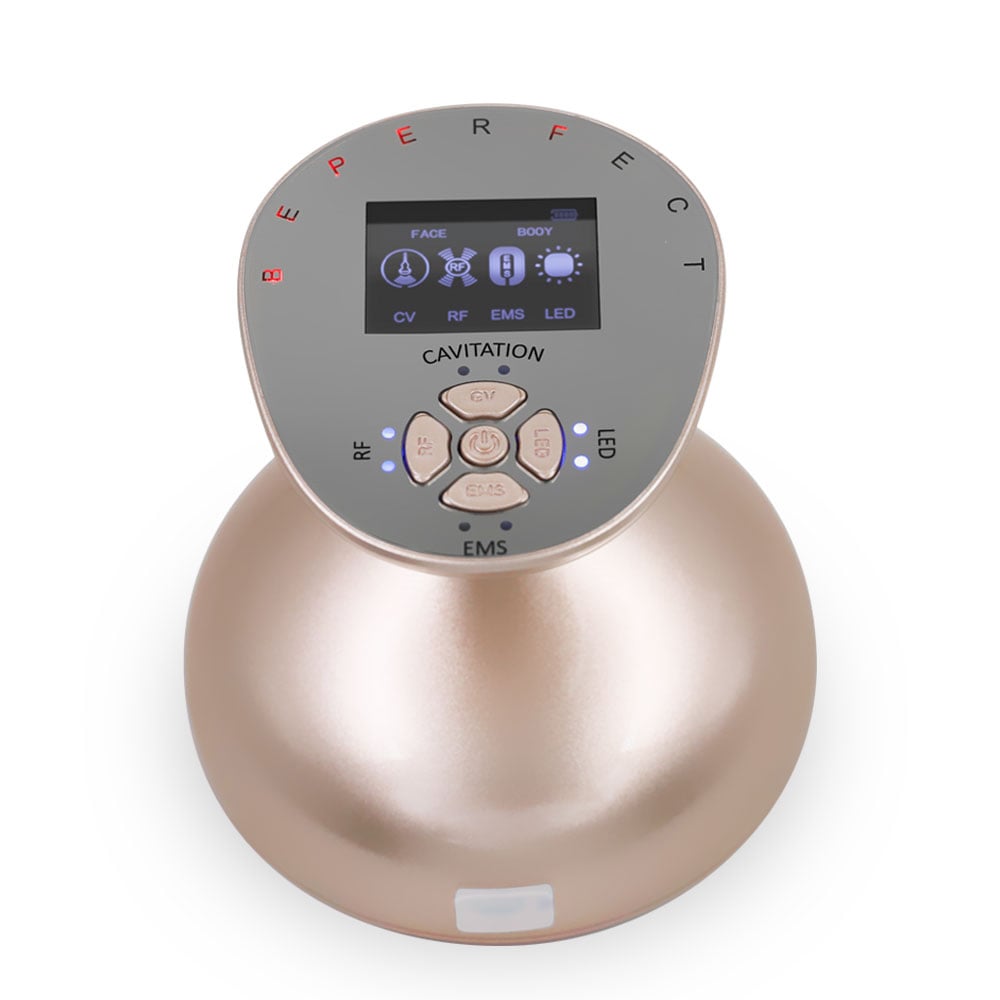
Choosing an EMS face device for a professional treatment menu is less about finding the most dramatic marketing claim and more about matching a controlled electrical-stimulation tool to a defined service, client profile, and operating routine. In a clinic, spa, or skin-management studio, the right EMS face platform must be understandable for staff, comfortable for clients, cleanable between appointments, and supported by credible technical documentation.
This guide takes the perspective of a skin-management professional evaluating an EMS face device before purchase. It does not promise a facelift or diagnose a condition. Instead, it shows how to compare intended use, current delivery, treatment controls, usability, and supplier support so your decision can stand up to a real service workflow.
“EMS” usually refers to electrical muscle stimulation. An EMS face device uses electrodes or conductive contact points to deliver electrical pulses intended to stimulate facial muscles. That is not automatically the same as microcurrent. Microcurrent devices are often discussed in terms of lower-level current and may be positioned differently by brands, while an EMS face device is typically evaluated around perceptible muscle stimulation and controlled pulse delivery.
Ask a practical question first: what role will the EMS face treatment play? It might be a short add-on within a facial protocol, a focused lower-face service, or a retail-supported home-care recommendation. Each option changes the requirements for treatment time, applicator design, operator training, and client consultation. If the answer is vague, the device specification will be vague too.
Begin with the supplier’s intended-use statement, instructions for use, contraindications, and target-market documentation. An EMS face device should be assessed according to the claims you plan to communicate—not claims copied from a generic marketplace listing. Do not turn cosmetic positioning into a medical claim during sales training.
For regulated or medical-electrical positioning, ask which documents apply in your destination market. FDA guidance exists for powered muscle stimulator 510(k) submissions, but that does not mean every EMS face device has the same status or is suitable for the same purpose. Request model-specific evidence, document dates, and the legal entity responsible for the file.
A useful EMS face device gives an operator meaningful control without burying them in settings. Review intensity range, pulse modes, session timers, pause controls, contact alerts, and whether left and right treatment areas can be managed consistently. The goal is not maximum sensation. It is a repeatable protocol with a clear start point, a monitored adjustment path, and a safe stop point.
During a demonstration, have the trainer explain what each setting changes and when it should not be changed. If the explanation becomes “use the highest level the client can tolerate,” that is a warning sign. A professional EMS face protocol works better when it is based on comfort, observation, and the device instructions rather than a single aggressive setting.
Electrode geometry affects whether an EMS face treatment can be placed consistently around the areas included in your protocol. Consider the contact surface, lead routing, handle weight, conductive medium requirements, and how easily accessories can be cleaned or replaced. Also check whether the device accommodates different face shapes without forcing staff to maintain an awkward hand position.
Run a simple room test: can an operator set up the EMS face unit, prepare the contact surfaces, conduct a treatment, document the session, and reset the station within the appointment window? This small trial often reveals what a feature list misses: tangled leads, consumables with unclear replacement intervals, or surfaces that are awkward to disinfect.
Ask for the operating manual, electrical ratings, charging or mains-power details, cleaning instructions, warranty terms, and technical service route before committing to an EMS face purchase. Where a product is positioned as medical electrical equipment, relevant safety and EMC considerations may include IEC 60601-family requirements; IEC 60601-1-2 addresses electromagnetic disturbances and emissions for medical electrical equipment. Applicability depends on the actual product classification and market, so treat this as a documentation question, not a label to add to your brochure.
For every EMS face candidate, record the model number, revision of the instructions, included accessories, consumable SKUs, and service contact. This makes replacement and training more manageable when the device moves from purchasing to daily use.
The device is only one part of an EMS face program. Evaluate whether the supplier can provide onboarding materials, neutral protocol guidance, packaging and labeling support where appropriate, and a clear response path for technical questions. If you are building a private-label range, clarify customization limits, minimum order quantities, quality-control checkpoints, and which changes require renewed validation or documentation.
For beauty professionals, a slower but documented EMS face rollout is usually more valuable than a fast launch with inconsistent training. Ask for a sample unit or structured demonstration before placing a volume order.
| Selection area | Questions to score | Why it matters |
|---|---|---|
| Service fit | Does the EMS face workflow fit your appointment length and client journey? | Prevents an unused device from becoming a shelf item. |
| Control clarity | Can staff explain and repeat intensity, mode, and timing choices? | Supports consistent delivery. |
| Contact and hygiene | Are applicators comfortable, replaceable, and practical to sanitize? | Protects workflow quality. |
| Documentation | Are instructions, intended-use statements, and market documents model-specific? | Reduces procurement uncertainty. |
| After-sales support | Are training, consumables, warranty, and repair paths clear? | Improves long-term usability. |
Score each EMS face option from one to five, then discuss the totals with the people who will actually use and maintain it. A device with a smaller feature list can be the stronger choice if the EMS face workflow is easier to train, clean, and document.
The most suitable EMS face choice is the one your team can use responsibly and consistently. Keep the final decision grounded in intended use, clear controls, contact and hygiene requirements, documentation, staff training, and supplier support. Then test the protocol with a limited rollout, collect operator feedback, and revise your internal checklist before treating the device as a standard service tool.
That approach gives beauty professionals a more durable basis for selecting an EMS face device than headline claims alone: a device that fits the actual client experience, the treatment room, and the standards of the business behind it.

2026/10/30
Discover why in-house mold development helps an RF beauty device manufacturer improve product consistency, iteration speed, tooling control, and production readiness.

2026/10/30
Learn how to verify an RF beauty device manufacturer's R&D and prototyping capabilities using practical engineering workflows and audit checklists.

2026/10/30
Learn what shapes MOQ when choosing an RF beauty device manufacturer and how to plan a lower-risk first order with balanced platform and customization.

2026/10/30
Use this RF beauty device manufacturer evaluation checklist to compare safety evidence, OEM and ODM capability, quality control, and launch readiness.

2026/10/30
See how technology makes beauty at home more guided, consistent, and informed—plus a practical checklist for choosing devices wisely.

2026/10/30
Explore how AI and smart devices shape the future of beauty with responsive routines, clear guidance, trustworthy design, and user-controlled care.

Ideal for daily facial care routines, providing easy-to-use beauty solutions at home.

Perfect for spas and salons’ frequent treatments, enhancing client experiences and results.

Supports dermatologists with advanced devices for professional skin therapy sessions.

Delivers innovative solutions for full-body massage and relaxation with home devices.

Features anti-aging technologies to help reduce wrinkles and stimulate skin vitality.

Specialized devices for safe and effective hair removal suitable for home or clinic use.

Our customers love the Perfect Idea beauty devices. Quality, packaging, and results are all outstanding. We saw increased repeat sales after adding their facial cleansers to our lineup. Their support team is responsive and reliable.

Perfect Idea brings innovation and reliability to home beauty appliances. Our collaboration introduced their massage tools to Japanese women, boosting customer satisfaction and growing our brand trust across the region.

We partnered with Shenzhen Perfect Idea Tech for their beauty equipment. The shipping was fast and every product matched our expectations. Their home-use massagers are especially popular with local salons and home users.

The stylish packaging and attractive design make Perfect Idea stand out. French consumers appreciate the easy instructions and visible results. Communication was efficient and orders always arrived on time.

Perfect Idea home use personal care devices have become a favorite with our clients. The beauty device line offers quality at a reasonable price, and technical training for our staff made onboarding easy.

We selected Perfect Idea for our beauty product portfolio and have seen very positive feedback from our customers. Products are easy to market online and the customer support is reliable and helpful.
