 EN
Home Skincare
Ideal for daily facial care routines, providing easy-to-use beauty solutions at home.

2026/10/24
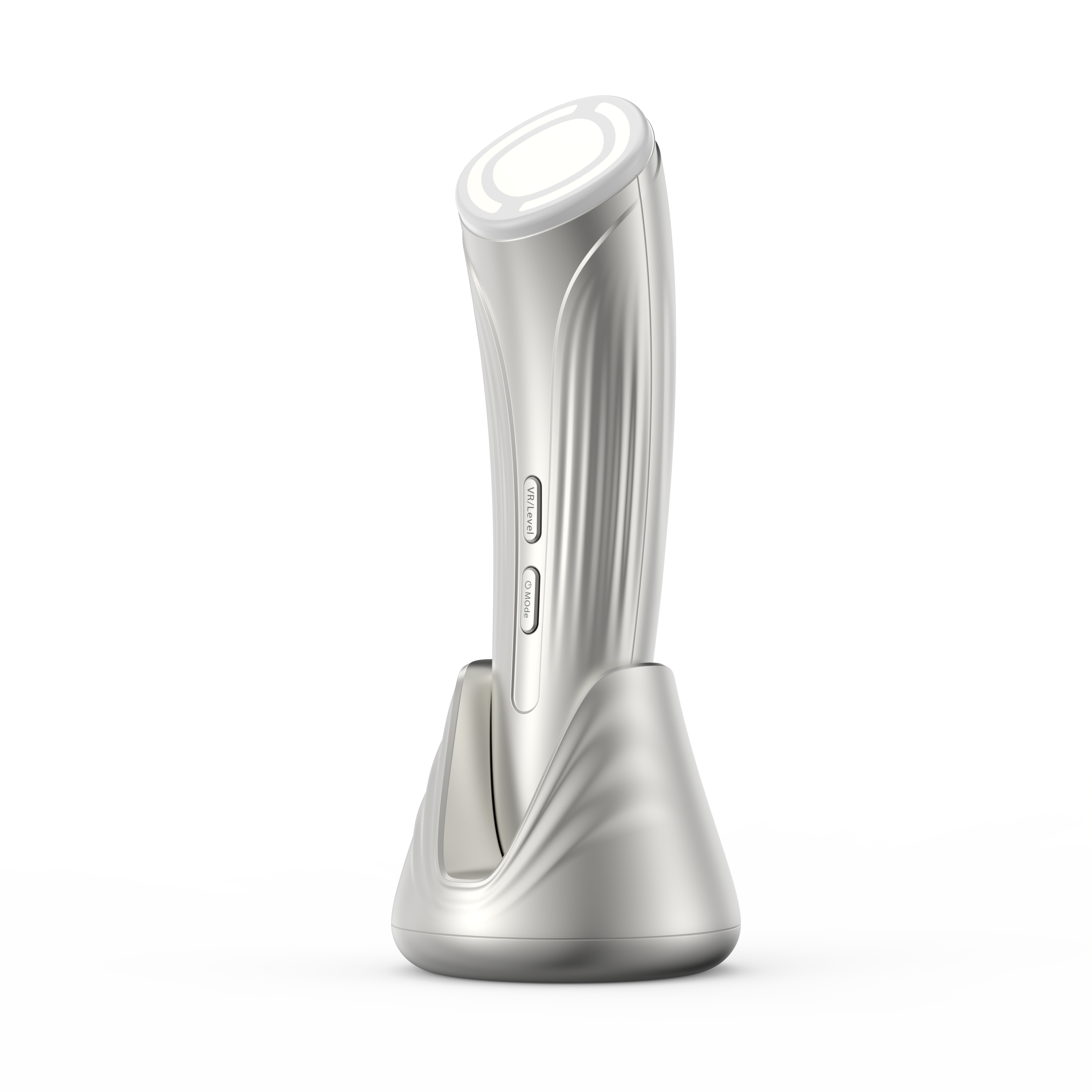
Choosing a beauty equipment producer is not simply a catalog comparison. For a private-label brand, the supplier becomes part of the product-development, quality, and launch process. A polished sample or a low opening quote can be useful, but neither proves that the same supplier can deliver repeatable production, controlled changes, and documents that fit your target market.
From an international buyer’s perspective, the sensible way to assess a potential supplier is to turn vague promises into evidence requests. This checklist gives procurement, product, and compliance teams a practical order of work before they commit to tooling, packaging, or a purchase order.
Start with a one-page product brief. State the device category, intended user, power source, core functions, target retail price, preferred order quantity, packaging languages, and the countries where you plan to sell. Give this same version to every candidate beauty equipment producer. It makes proposals comparable and shows whether the candidate asks useful technical questions rather than sending a generic brochure.
Be especially precise about claims. A home-use beauty device, a salon device, and a cosmetic accessory may follow different regulatory and labelling paths. In the United States, for example, FDA explains that cosmetics are not pre-approved, while safety substantiation remains a responsibility; a product’s claims and classification can change the compliance discussion. Ask the candidate to identify what it believes applies, then have your own qualified compliance adviser validate the route for each target market.
Do not assume those labels mean the same thing to every candidate supplier. In a private-label arrangement, the product may be largely existing while branding and packaging change. An OEM project may require the brand to supply specifications. An ODM project may include a producer’s existing platform plus agreed design or feature changes. The right model depends on how much differentiation you need and how much engineering risk you can manage.
Ask each candidate for a line-by-line scope: industrial design, electronics, firmware or app support if relevant, molds, color matching, logo treatment, packaging, manuals, testing coordination, and after-sales spare parts. If an item is outside the scope, identify who owns it and when it becomes a launch blocker.
A capable supplier should be able to explain how a concept travels from requirement to approved sample and then to production. The exact evidence will vary by device, but the request should be concrete: a redacted process flow, sample inspection records, version-control examples, incoming-material controls, assembly checks, and a description of how nonconforming units are handled.
Look for consistency between the sales conversation and the operating process. For example, if a producer offers logo, packaging, and manual localization, ask to see the approval checkpoints that prevent an old artwork version from being used. If it offers end-to-end ODM support, ask who signs off on engineering changes and how the brand is informed. This is more useful than treating a broad service claim as proof.
Do not approve a sample solely because it looks attractive. Build a scorecard before the sample arrives, then use it for every candidate beauty equipment producer. Include appearance, materials, fit and finish, operating instructions, charging or power behavior where applicable, packaging, documentation, and the consistency of answers to technical questions.
Many buyers initially focus on feature count. In practice, the ability to control a repeatable user experience often matters more than a long list of features that are hard to explain or support. Add a “must fix / nice to have / not required” column to the scorecard. This simple record also reduces the chance that informal feedback becomes an unbounded redesign request.
Ask the supplier to describe quality checks at incoming inspection, in-process assembly, final inspection, and pre-shipment. The goal is not to demand a particular certificate by name; it is to understand whether the controls match your product risk and whether records can be retrieved by batch, order, or serial number where relevant.
| Checkpoint | What to ask | Why it matters |
|---|---|---|
| Materials and components | How are approved components identified and substituted? | Prevents silent changes that affect performance or appearance. |
| Assembly | Which steps are inspected and what triggers rework? | Shows whether defects are found before final packing. |
| Final test | What is checked on each unit or sample basis? | Connects your acceptance criteria to an actual release step. |
| Traceability | Which records can be linked to a shipment? | Supports investigation if a market issue appears. |
Request sample records where confidentiality allows. A producer does not need to expose another customer’s data to explain its system, but it should be able to show how its own records work.
Private-label projects often fail in handoffs, not in the first sample. Evaluate response quality as well as speed. Does the supplier restate the requirement, flag ambiguous points, identify lead-time dependencies, and document changes? A supplier that says “yes” to every request but cannot explain the effect on cost, timing, or testing creates hidden risk.
Before selecting a producer, confirm the quotation basis, minimum order quantity, sample and tooling charges, payment milestones, production lead time, packaging lead time, defect-handling process, warranty boundaries, and spare-parts availability. Put the approved specification, artwork, acceptance criteria, and change-approval method into the contract or purchase-order attachments.
Score each candidate supplier against the same weighted criteria: product fit, engineering scope, sample performance, quality evidence, compliance readiness, communication, commercial terms, and launch support. Price belongs in the score, but it should not erase a major documentation or process gap. The lowest quote can become the highest-cost option if it produces rework, relabelling, delays, or inconsistent batches.
A pilot order is a final learning stage, not merely a smaller production order. Review the first-run documentation, packaging accuracy, inspection outcomes, and communication record. If the producer can close issues transparently and preserve agreed controls, you have evidence for a longer relationship. If it cannot, the pilot has done its job by limiting exposure.
A suitable beauty equipment producer is a supplier whose product fit, documentation, communication, and production controls can be verified against the needs of your brand and market plan.

2026/10/30
Discover why in-house mold development helps an RF beauty device manufacturer improve product consistency, iteration speed, tooling control, and production readiness.

2026/10/30
Learn how to verify an RF beauty device manufacturer's R&D and prototyping capabilities using practical engineering workflows and audit checklists.

2026/10/30
Learn what shapes MOQ when choosing an RF beauty device manufacturer and how to plan a lower-risk first order with balanced platform and customization.

2026/10/30
Use this RF beauty device manufacturer evaluation checklist to compare safety evidence, OEM and ODM capability, quality control, and launch readiness.

2026/10/30
See how technology makes beauty at home more guided, consistent, and informed—plus a practical checklist for choosing devices wisely.

2026/10/30
Explore how AI and smart devices shape the future of beauty with responsive routines, clear guidance, trustworthy design, and user-controlled care.

Ideal for daily facial care routines, providing easy-to-use beauty solutions at home.

Perfect for spas and salons’ frequent treatments, enhancing client experiences and results.

Supports dermatologists with advanced devices for professional skin therapy sessions.

Delivers innovative solutions for full-body massage and relaxation with home devices.

Features anti-aging technologies to help reduce wrinkles and stimulate skin vitality.

Specialized devices for safe and effective hair removal suitable for home or clinic use.

Our customers love the Perfect Idea beauty devices. Quality, packaging, and results are all outstanding. We saw increased repeat sales after adding their facial cleansers to our lineup. Their support team is responsive and reliable.

Perfect Idea brings innovation and reliability to home beauty appliances. Our collaboration introduced their massage tools to Japanese women, boosting customer satisfaction and growing our brand trust across the region.

We partnered with Shenzhen Perfect Idea Tech for their beauty equipment. The shipping was fast and every product matched our expectations. Their home-use massagers are especially popular with local salons and home users.

The stylish packaging and attractive design make Perfect Idea stand out. French consumers appreciate the easy instructions and visible results. Communication was efficient and orders always arrived on time.

Perfect Idea home use personal care devices have become a favorite with our clients. The beauty device line offers quality at a reasonable price, and technical training for our staff made onboarding easy.

We selected Perfect Idea for our beauty product portfolio and have seen very positive feedback from our customers. Products are easy to market online and the customer support is reliable and helpful.
