 EN
Home Skincare
Ideal for daily facial care routines, providing easy-to-use beauty solutions at home.

2026/10/03
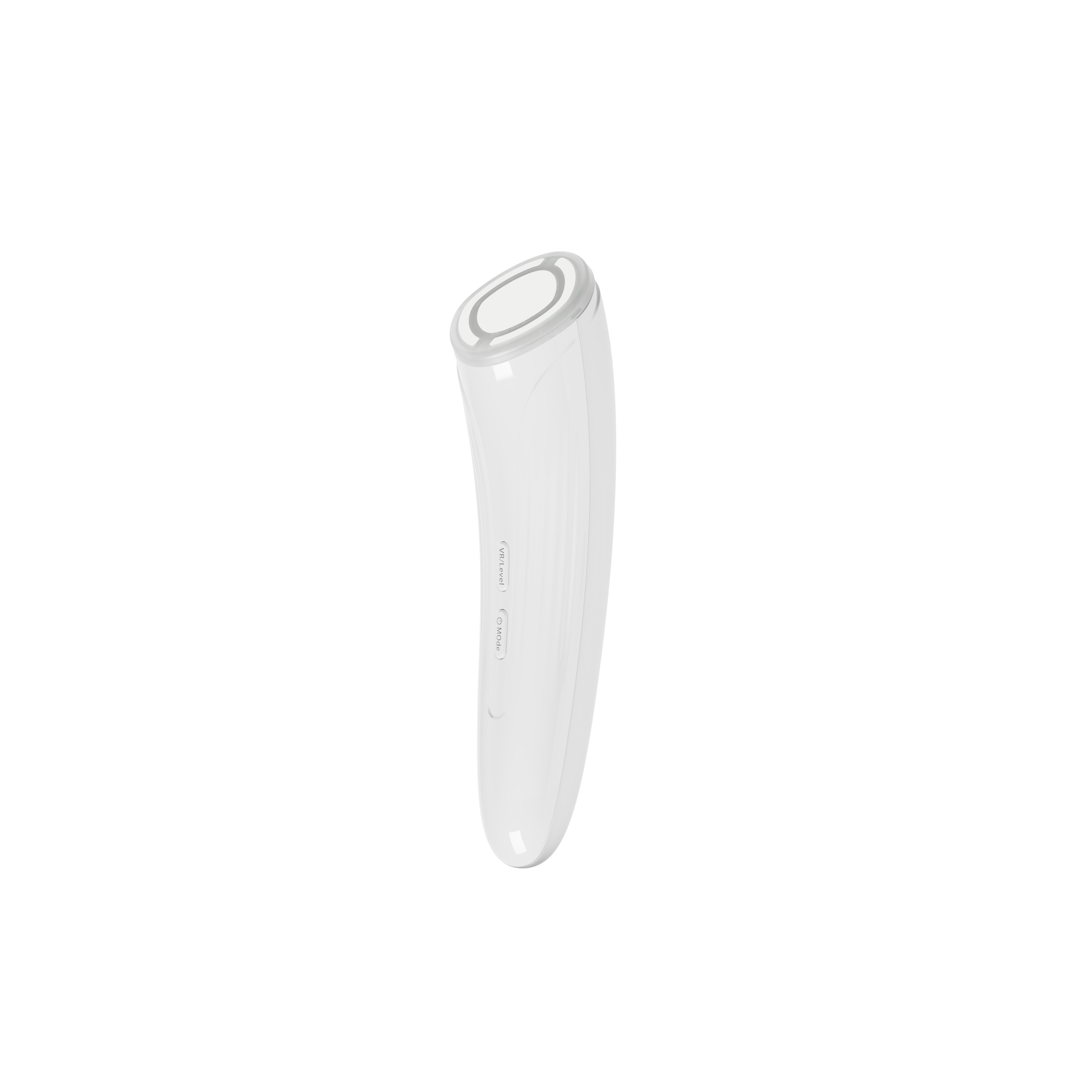
From an OEM/ODM brand-development perspective, the practical question is not “Does this sample pass?” It is “Can this factory repeatedly build the agreed product, document what it built, and investigate a deviation without losing the trail?” End-to-end control makes that question answerable. It is particularly important for professional beauty equipment, where electrical safety, repeatable user experience, packaging, labeling, and market-specific claims can all affect a brand’s risk exposure.
Final inspection is valuable, but it is a filter, not a quality system. It can catch visible damage, missing accessories, basic functional failures, and packaging mistakes. It cannot reliably inspect quality into a product after critical work has already happened. If a supplier substituted a component, if a production setting drifted between shifts, or if a design requirement was misunderstood upstream, a finished-goods check may identify only some symptoms.
That is why strong beauty equipment manufacturing starts with a controlled chain of decisions. The design brief defines intended use, markets, interfaces, labeling requirements, and acceptance criteria. Supplier qualification establishes what materials, electronics, and outsourced processes are acceptable. Incoming checks verify that what arrives matches that approved basis. In-process controls then confirm that assembly, programming, charging, sealing, and functional testing follow validated work instructions. Final release confirms that the completed lot meets documented requirements before shipment.
The lesson is simple: an end-of-line test is most useful when it confirms a controlled process rather than compensates for an uncontrolled one.
A project needs more than an attractive industrial design. Teams should translate the commercial brief into controlled, testable requirements: approved materials, electrical input, user-interface behavior, charging logic, accessories, packaging, labeling, and acceptance limits. When the design moves into production, the factory needs the same revision-controlled drawings, bills of materials, test methods, and work instructions that the development team approved.
This is also where claim discipline begins. The regulatory pathway for a product depends on its intended use, technology, and destination market. A factory should not imply that all aesthetic equipment is regulated in the same way, or that a quality-process document equals product clearance. Where a product is regulated as a medical device, the applicable quality and regulatory requirements may be much more specific. For example, FDA states that its Quality Management System Regulation became effective on February 2, 2026 and incorporates ISO 13485:2016 by reference for FDA-regulated finished medical devices. That is useful context, not a substitute for classification analysis.
Many field failures begin before the assembly line. Batteries, LEDs, motors, PCBs, plastics, cables, adhesives, chargers, and packaging each bring their own failure modes. A supplier-control plan should identify critical parts, define approved specifications, require change notification, and set an evidence-based incoming-inspection approach. A proven supplier may justify a different sampling approach than a new or poorly performing supplier, but neither should be managed on verbal assurances alone.
FDA’s purchasing-controls guidance makes the same connection in the medical-device context: supplier controls and acceptance activities complement each other, and the extent of incoming acceptance can reflect the supplier’s demonstrated capability. For beauty equipment programs, the operational principle is broadly useful even where that specific regulation does not apply. Keep supplier performance, incoming results, and corrective actions connected to the same part number and revision.
Production control turns a specification into a repeatable unit. That means trained operators, clear line instructions, calibrated or verified test equipment, defined rework rules, and recorded results for critical operations. For an electrically powered device, a robust plan may include assembly checks, programming confirmation, functional testing, charge or power checks where relevant, visual inspection, and controlled packing verification. The exact test plan must match the product; adding generic tests only to make a checklist look impressive is not control.
Traceability is what allows a team to connect a unit or lot to its component sources, process records, test outcomes, and shipment. Without it, a complaint about one production batch can become a costly search through incomplete records. With it, the team can isolate the affected configuration, determine the scope, and decide whether containment, rework, supplier action, or a design change is warranted.
Before shipment, the responsible release process should verify that the lot is complete, the required records are present, nonconformities have been dispositioned, and packaging and labeling match the approved version. This is where a buyer should expect a coherent release package rather than an informal “passed QC” statement. It should be possible to see what was checked, against which revision, by whom, and what happened when a result fell outside the acceptance criteria.
For OEM beauty equipment, this protects both parties. The manufacturer can show that it followed the agreed process, while the brand has evidence to support receiving inspection, market release, and later investigation. It also reduces the familiar and expensive gap between a hand-built sample and a scaled production lot.
End-to-end does not end at dispatch. Returns, customer-service reports, distributor feedback, and recurring repair observations are inputs to the quality system. A mature response distinguishes a one-off handling issue from a repeatable pattern, documents the investigation, identifies root causes where evidence supports them, and checks whether corrective action actually worked.
That feedback loop matters because it exposes issues that factory tests may not reproduce: transport stress, real-world charging behavior, confusing setup instructions, or variation in a component after a supplier change. Treating complaint data as a product-improvement signal helps prevent the same problem from being built into the next lot.
Not every beauty equipment program needs the same inspection depth, but every program needs a documented rationale. A simple corded accessory and a rechargeable, heat-generating device do not present the same component, electrical, use, or after-sales risks. The quality plan should identify features that can affect safety, function, customer understanding, or regulatory status, then assign controls before volume production begins.
For beauty equipment with electronics, the plan may cover approved components, power and charging behavior, configuration where applicable, mechanical fit, cosmetic appearance, and packaging completeness. For aesthetic equipment sold into professional channels, it may also consider the intended operator and destination-market evidence. When a check fails, the plan should define whether the unit is held, reworked under an approved instruction, retested, scrapped, or investigated for broader lot impact.
Before approving professional beauty equipment for volume production, a brand can review the specification, approved sample record, inspection plan, critical-component list, final-test record format, and artwork revision. For an OEM beauty equipment program, it should also agree change-control expectations for parts, firmware, materials, and instructions. That is how development decisions remain connected to routine production.
When comparing beauty equipment manufacturers, ask for process evidence rather than relying on broad assurances. A useful conversation covers:
A buyer does not need every program to use the same depth of controls. The appropriate level depends on the device, its claims, its markets, and its risk profile. But the controls should form one connected system. If the factory cannot explain how a supplier deviation flows through incoming inspection, production records, final release, and post-market review, the program is relying on luck at one or more stages.
End-to-end quality control is critical because it shifts beauty equipment manufacturing from “inspect defects out” to “prevent, detect, document, and learn.” It reduces the chance that an unnoticed upstream variation reaches a customer, gives teams a defensible record when a question arises, and creates a practical route for continuous improvement.
For brands, the strongest manufacturing partner is not the one that promises zero issues. It is the one that can show how it controls the work, identifies exceptions, preserves traceability, and uses real feedback to make the next production run more reliable.

2026/10/30
Discover why in-house mold development helps an RF beauty device manufacturer improve product consistency, iteration speed, tooling control, and production readiness.

2026/10/30
Learn how to verify an RF beauty device manufacturer's R&D and prototyping capabilities using practical engineering workflows and audit checklists.

2026/10/30
Learn what shapes MOQ when choosing an RF beauty device manufacturer and how to plan a lower-risk first order with balanced platform and customization.

2026/10/30
Use this RF beauty device manufacturer evaluation checklist to compare safety evidence, OEM and ODM capability, quality control, and launch readiness.

2026/10/30
See how technology makes beauty at home more guided, consistent, and informed—plus a practical checklist for choosing devices wisely.

2026/10/30
Explore how AI and smart devices shape the future of beauty with responsive routines, clear guidance, trustworthy design, and user-controlled care.

Ideal for daily facial care routines, providing easy-to-use beauty solutions at home.

Perfect for spas and salons’ frequent treatments, enhancing client experiences and results.

Supports dermatologists with advanced devices for professional skin therapy sessions.

Delivers innovative solutions for full-body massage and relaxation with home devices.

Features anti-aging technologies to help reduce wrinkles and stimulate skin vitality.

Specialized devices for safe and effective hair removal suitable for home or clinic use.

Our customers love the Perfect Idea beauty devices. Quality, packaging, and results are all outstanding. We saw increased repeat sales after adding their facial cleansers to our lineup. Their support team is responsive and reliable.

Perfect Idea brings innovation and reliability to home beauty appliances. Our collaboration introduced their massage tools to Japanese women, boosting customer satisfaction and growing our brand trust across the region.

We partnered with Shenzhen Perfect Idea Tech for their beauty equipment. The shipping was fast and every product matched our expectations. Their home-use massagers are especially popular with local salons and home users.

The stylish packaging and attractive design make Perfect Idea stand out. French consumers appreciate the easy instructions and visible results. Communication was efficient and orders always arrived on time.

Perfect Idea home use personal care devices have become a favorite with our clients. The beauty device line offers quality at a reasonable price, and technical training for our staff made onboarding easy.

We selected Perfect Idea for our beauty product portfolio and have seen very positive feedback from our customers. Products are easy to market online and the customer support is reliable and helpful.
